TrustNet is a Global InfoSec Award Winner

Editor’s Choice for Managed Security Service Provider












“TrustNet's extensive knowledge and experience navigating between various certification frameworks, allowed us to fast-track the audit process, leading us to complete the certification with confidence.”
Chris Hagenbuch
Principal - Canda Solutions

“TrustNet has streamlined the Compliance process for my company. With weekly project status updates and reports, I am assured that my staff is up to date on all document submissions.”
Andy Wanicka
President - Certified Medical Consultants

“TrustNet performs our annual SOC 2 Type 2 audit. The audit team is professional, highly experienced, and very easy to work with, making the audit process very streamlined.”
Chris Porter
Director, IT and Security - Cervey
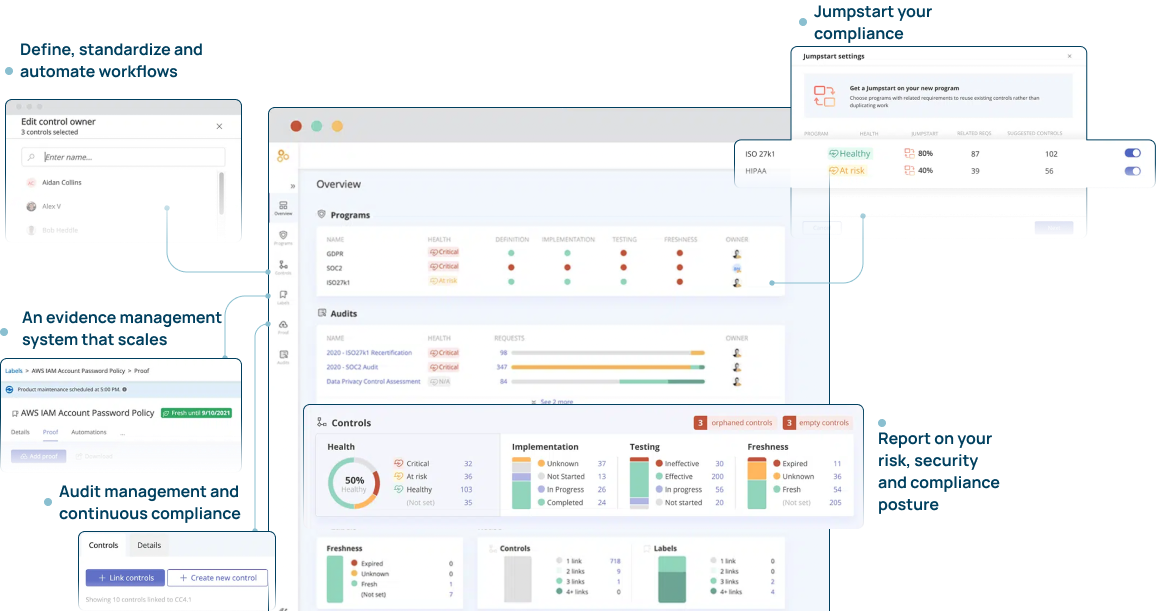
Compliance Management Platform
Audit Management and Continuous Compliance by Experts
Why Clients Choose TrustNet
EXPERTISE
Over a decade of experience with clients around the world and across multiple industries.
PRICING
Straightforward fixed fees. High quality without the high sticker price.
TRUST
The right resources with the right qualifications. Building relationships and long-term partnerships with our clients.